
Aporia
Embracing the inspiration of doubts.
🌱 So we’re forced to wrestle with our old certainties, and if we’re lucky, we come out the other side humbler and more nuanced in our faith.
Sarah Hurwitz¹

Audio narration by David Marlow
Definition.
aporia (n.)
From Greek…difficulty, perplexity, want of means.
In rhetoric, professed doubt as to where to begin.
Original from the Greek poros meaning “a journey, passage, way;” Latin portus "port, harbor," originally "entrance, passage;” Old Church Slavonic pariti "to fly;" Old English faran "to go, journey,"

Risk
I receive dozens of messages each week.
Three questions echo between the lines of every message…
Who am I? 🌀
Why am I here? 🌀
What should I do? 🌀
Where do we begin answering these three most fundamental questions about life?
Grappling with the profound mystery of why the events of chance or divine design conspired to bring us into being.
It is in those moments of aporia that doubt arises. Paralyzed by doubt, we find ourselves suspended, unable to move, caught between the narratives we've inherited and the narrative we were created to embody.
If we let it this doubt can become a paralyzing wall blocking us from our life’s call.
There is an alternative.

Opportunity🌀
It begins and then it becomes.
Doubt, a lack of confidence, and fear can end any dream. We’ve all faced it.
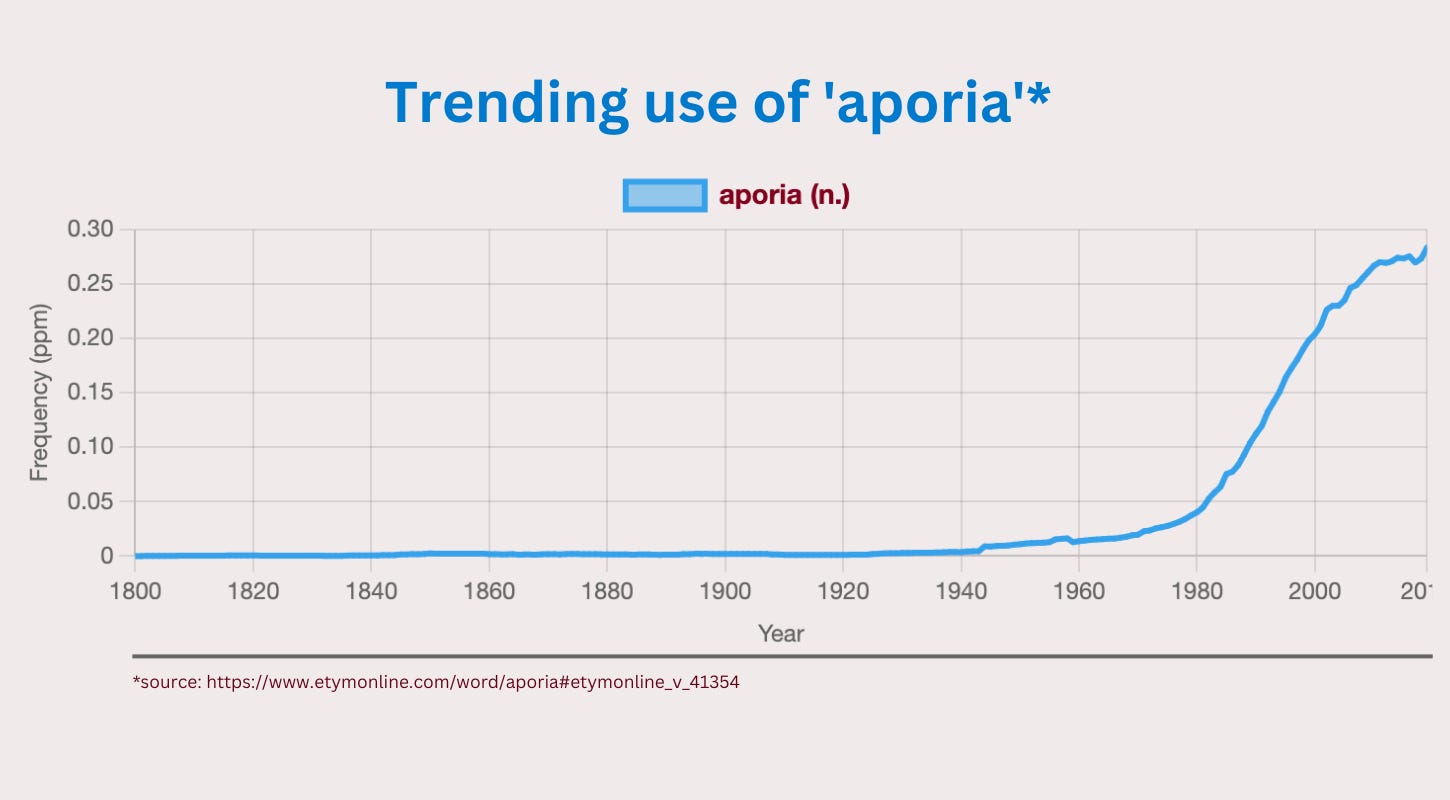
Perhaps that is why use of the word aporia is on the rise.
One of my favorite Christian scriptures is where a man whose son is sick asks Jesus to heal him. Jesus tells the man, “…all things are possible to him who believes.”
Here’s the best part. The man, cries out, “Lord, I believe…help my unbelief!”
It is a favorite because I can relate to this father. Wanting something so badly, needing it with every part of my being.
Help my unbelief.
With the language of purpose we can see that embedded in those doubts are the roots of aporia.
Like the man in the story who took the step to ask even before he believed, an aporic effort is one of beginning. To go, to journey to open the door…
To take a step and start!

Story
My first aporic situation was as a 16-year-old kid.
Other than not wanting to work another day at McDonald’s I had no idea what I wanted to do with my life.
My stepfather was known more for dispensing profanity-laced tirades than good advice.
On a fine summer day in 1977, while I was helping him repair the guttering and complaining about my job, completely out of character, he asked me a pair of questions that launched my first career ‘journey.’
“What do you like to do?”
I sheepishly replied that I didn’t know.
“What are you good at?”
Again, exhibiting early aporia, I said I wasn’t sure.
“Well, you seem to be pretty good at talking. Find something that involves talking.”
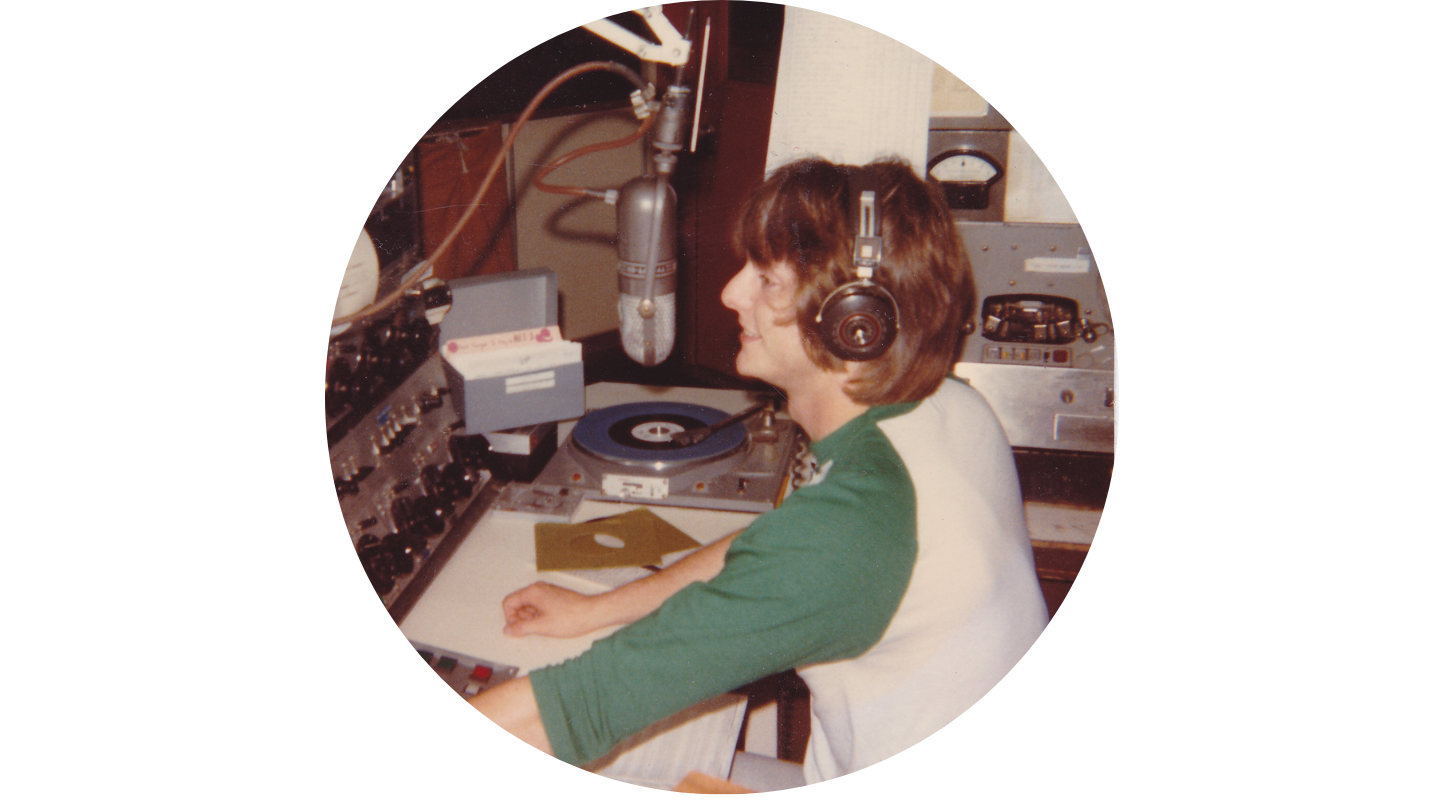
To this day I’m not sure whether he meant that as a compliment. Either way, it ignited my imagination.
Talking? I decided he was right I was good at talking and telling stories. People on the radio and television talk for a living.
As fortune would have it, I lived in one of the most opportune places to start a career in broadcasting. Small enough market for someone starting out and plenty of stations looking for talent.
I walked into the number one AM-FM-TV station and applied for a job.
It wasn’t many days later I got a call from the radio program director, Fred Peavy, offering me a job.
Years later after creating a successful career in radio, I asked Fred why he hired me. I knew full well I had no business in the ‘business’ at that point in my life.
“Some 16-year-old kid had the nerve to come into my station and think he could apply for an on-air job. I wanted to find out what you were all about, so I hired you.”

Application.
People ask me to help them ‘find’ their Ikigai though it is already there deep inside them.
Our Ikigai gets hidden over time, more the act of uncovering than finding.
We can stand there looking at the piles of life debris shrouding it or we can start picking off the pieces one by one.
Like the man who wanted to believe his son could be healed or the 16 -year-old who didn’t know what to do with his life, our journey starts with our doubts.
It is in those moments when we are perplexed and unsure of where to begin that can prompt us to leave the harbor and ‘poros’ or enter into the journey.

🌀Reflection.
When have you been in difficulty, perplexed, and professing doubts as to who you are, where you should go, and what you should do?
Think back to those times and recall what it felt like and what you did to get beyond it.
Can you take steps like that now?
Perhaps you are there today and can’t see your way clear.
Embrace that sense of aporia as the starter fuel for the fire of purpose in your life.
Dig deep into that doubt and embrace it, be grateful for it, and then keep going. Try, test, explore, and learn.
🌱 It is the beginning of the greatest journey of your life.
🌀 Remember: No matter what has come before, today is a fresh start. 🌱
Let’s make things a little bit better. 🌱
You can learn more about Ikiquest+ here.
For Plus subscribers, you can access your Ikiquest+ resources here.
Need help creating your Ikiverse? Explore 1-on-1 coaching here.
So good, David! It was enjoyable to listen to this while sipping my coffee this morning.
Thanks, David. This is an outstanding post, which I sense will unlock the door for many people. Cheering you on from over here 🌿